
For solid-format nutrition products such as pressed candies, powders and granules, the manufacturing process must connect material handling, equipment settings, in-process checks and batch records. This article follows the main steps described by SPARDER’s solid-dosage workshop, from mixing to filling and packaging. The actual specification and control plan for any customer product must be confirmed against its approved formula and applicable food-production licence.
Controlled material handling and mixing
Mixing is the starting point for a consistent powder blend. Material properties—including density, particle size and flow behaviour—inform the mixing equipment and process settings. The Chinese source describes the use of a three-dimensional movement mixer, with time and speed set and recorded for the relevant batch. Blend uniformity is one of the internal indicators used to assess the process and reduce segregation or caking risk.
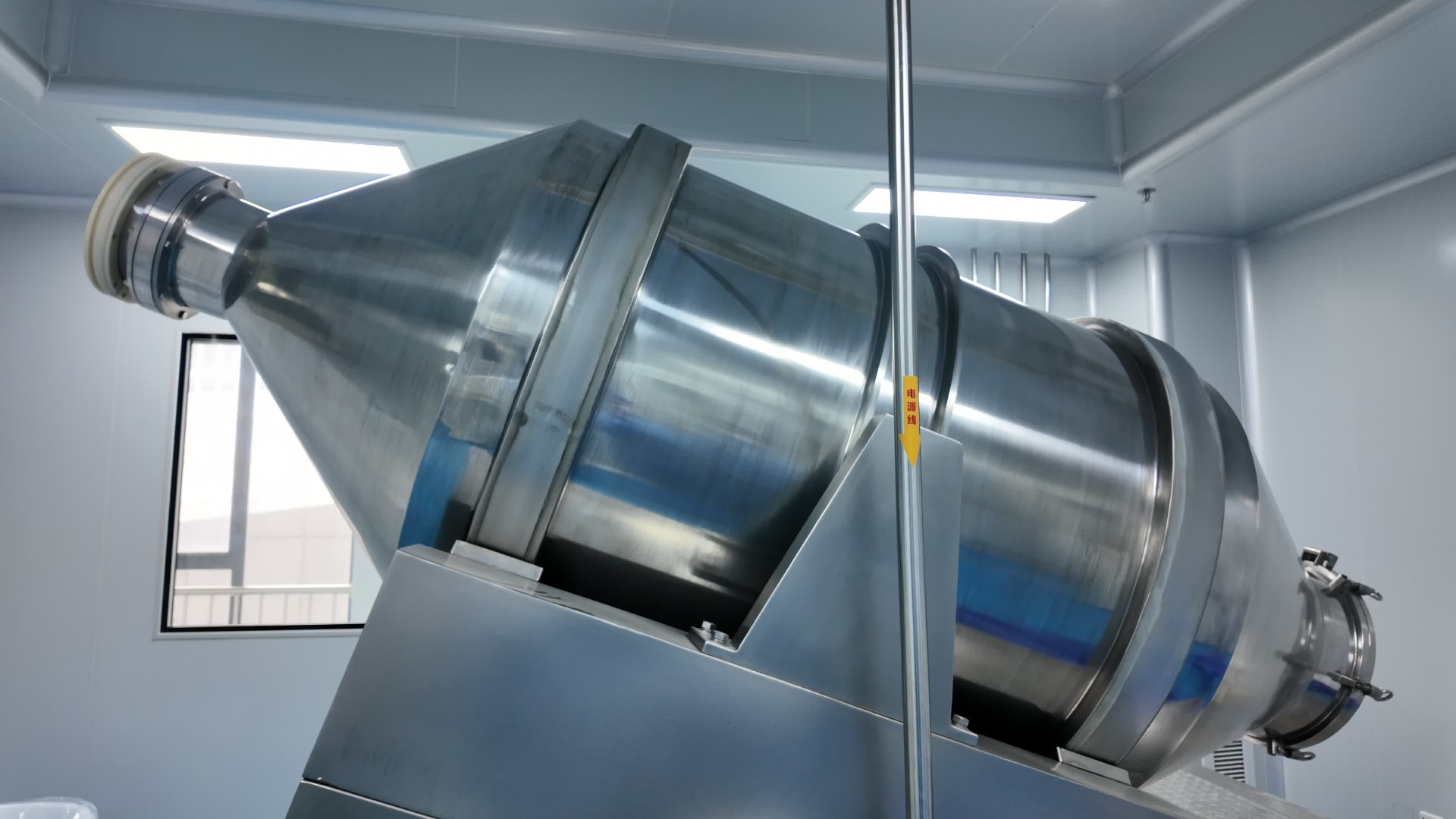
The source also describes enclosed feeding, mixing and discharge, stainless-steel contact surfaces, and formula-based weighing records. It reports weighing capability down to 0.001 g for relevant operations; this is an equipment or process statement, not a universal tolerance for every ingredient or finished product. Batch weighing records should be checked against the approved formula and process limits.
Powder sachet forming, filling and sealing
For powder stick packs or sachets, the line brings together film forming, filling and heat sealing. Sealing temperature, pressure and dwell time are set against the packaging material and product requirements. In-process checks may cover fill weight, seal integrity and pack appearance, with out-of-specification packs removed according to the applicable procedure. Production and inspection records provide the basis for batch traceability.

Pressed-candy tablet compression
In the tablet area, a rotary press forms the blended powder into tablets. Tooling and process parameters affect tablet weight, hardness, friability and disintegration or dispersion behaviour. The Chinese source describes in-process checks of weight, appearance and other applicable characteristics, as well as removal of visibly defective tablets such as cracked or chipped units. The test items and acceptance criteria must follow the approved product specification; a pressed candy is not automatically a medicinal tablet.
Coating: appearance and product-specific function
Where coating is part of the product design, a coating pan and spray system apply the coating liquid to the tablet surface. Pan speed, inlet-air temperature and spray pressure are adjusted for the selected coating material and product. Coating may help with appearance, taste masking or moisture management, but the result depends on the validated formula and process. The original report describes checks of coating appearance, adhesion and relevant dispersion or disintegration properties. It also describes controlled environmental conditions for the coating area; those conditions should be interpreted against the facility’s actual monitoring records rather than assumed to equal an international cleanroom classification.
Bottle counting and blister packaging
The workshop report describes both automated tablet counting into bottles and blister packing. Blister production can involve forming the cavity, feeding the tablet, heat-sealing the lidding material and cutting the finished card. Counting, position, print quality, appearance and seal integrity are relevant control points. For bottle filling, the counting set-up and in-process checks should support the declared pack count and net-content requirements for the actual product.
The original text refers to online rejection and traceability functions on relevant equipment. These functions should be linked to the approved line configuration and batch records; they should not be interpreted as a promise that every individual pack receives every possible test. Automated handling can reduce manual contact, but hygiene and contamination control still depend on validated cleaning, environmental and personnel procedures.
Quality records and permitted product scope
SPARDER’s source article places emphasis on process parameters, inspection records and batch traceability from raw material to finished pack. The company states that it will continue organising operations in line with applicable good-manufacturing practices and will accept solid-format projects only within the categories and conditions stated on its food-production licence and relevant food-safety management documentation. A customer’s formula, packaging, testing plan and label must be assessed before production.
Pressed candies are managed as food products in the applicable category, not as medicines. Statements about ingredients, quality or product benefits must be supported by the actual product evidence and the rules of the destination market. This workshop article is a description of manufacturing processes, not a claim that any product prevents or treats disease.
Originally published in Chinese on April 10, 2026. Images are from the original SPARDER workshop article. Technical parameters and available manufacturing scope should be checked against the relevant equipment, batch and licence records for each project.
 Return