
For oral liquids and other liquid-format food products, ingredient controls, mixing, container preparation, fill-volume checks, sealing and batch records all contribute to product consistency. This article follows the main equipment groups described in SPARDER’s Chinese workshop report. The exact process, hygiene classification, testing plan and production scope for a customer product must be confirmed against its approved formula, food-production licence and batch documentation.
1. Liquid blending in jacketed vessels
The original report describes jacketed mixing vessels used to manage temperature and agitation according to the material characteristics. Before use, ingredients are reviewed against supplier qualifications and incoming quality requirements. Weighing follows the approved formulation, with records retained for the batch. Temperature-sensitive or oil-soluble ingredients may need different addition sequences and mixing conditions; there is no single process that suits every formula.
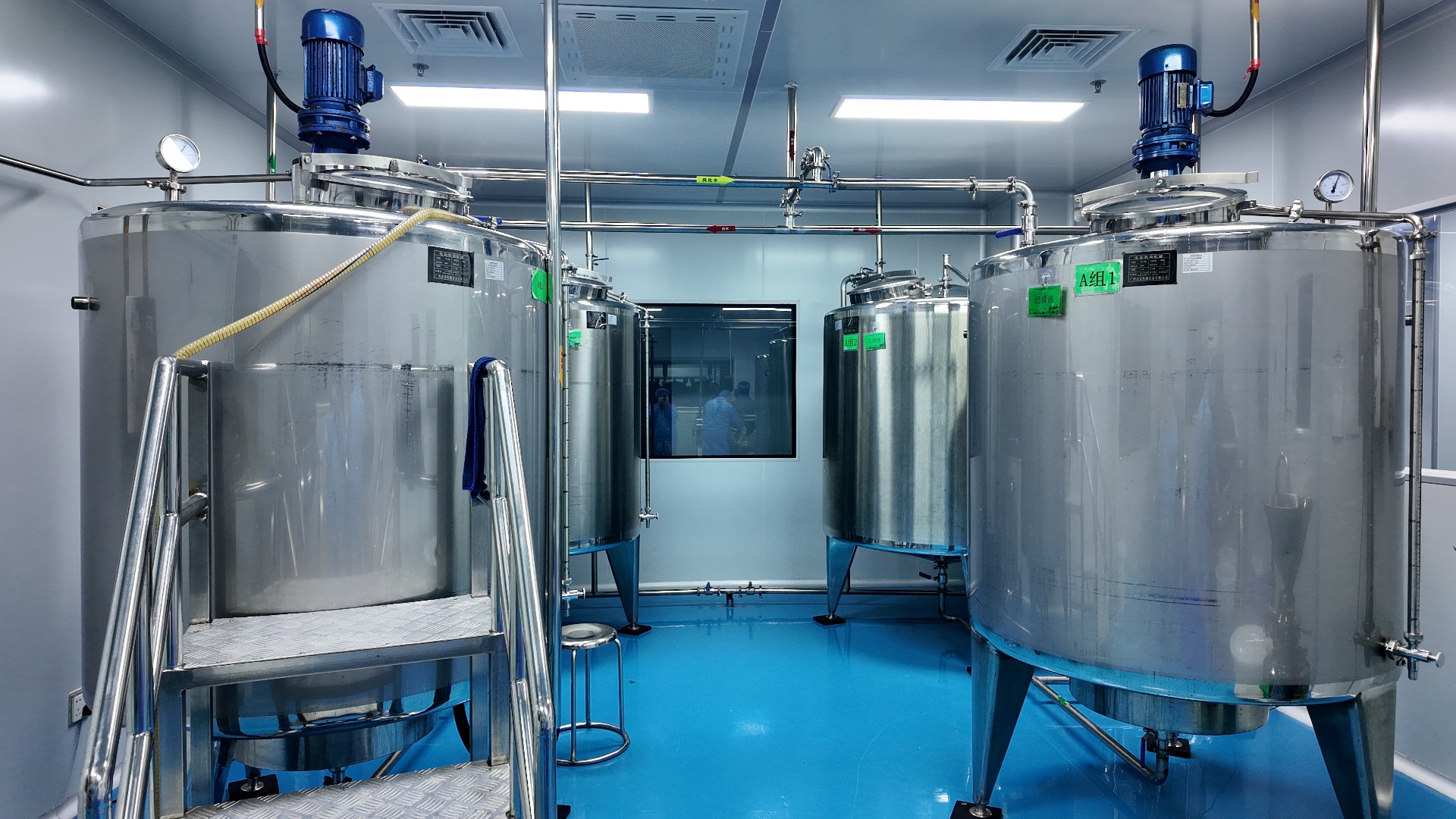
The Chinese report refers to enclosed handling, temperature control and weighing resolution of 0.001 g for certain operations. These should be understood as descriptions of equipment or specified steps, not a universal guarantee of finished-product content or tolerance. Batch records and applicable tests are needed to assess the actual result.
2. Glass-bottle preparation and filling
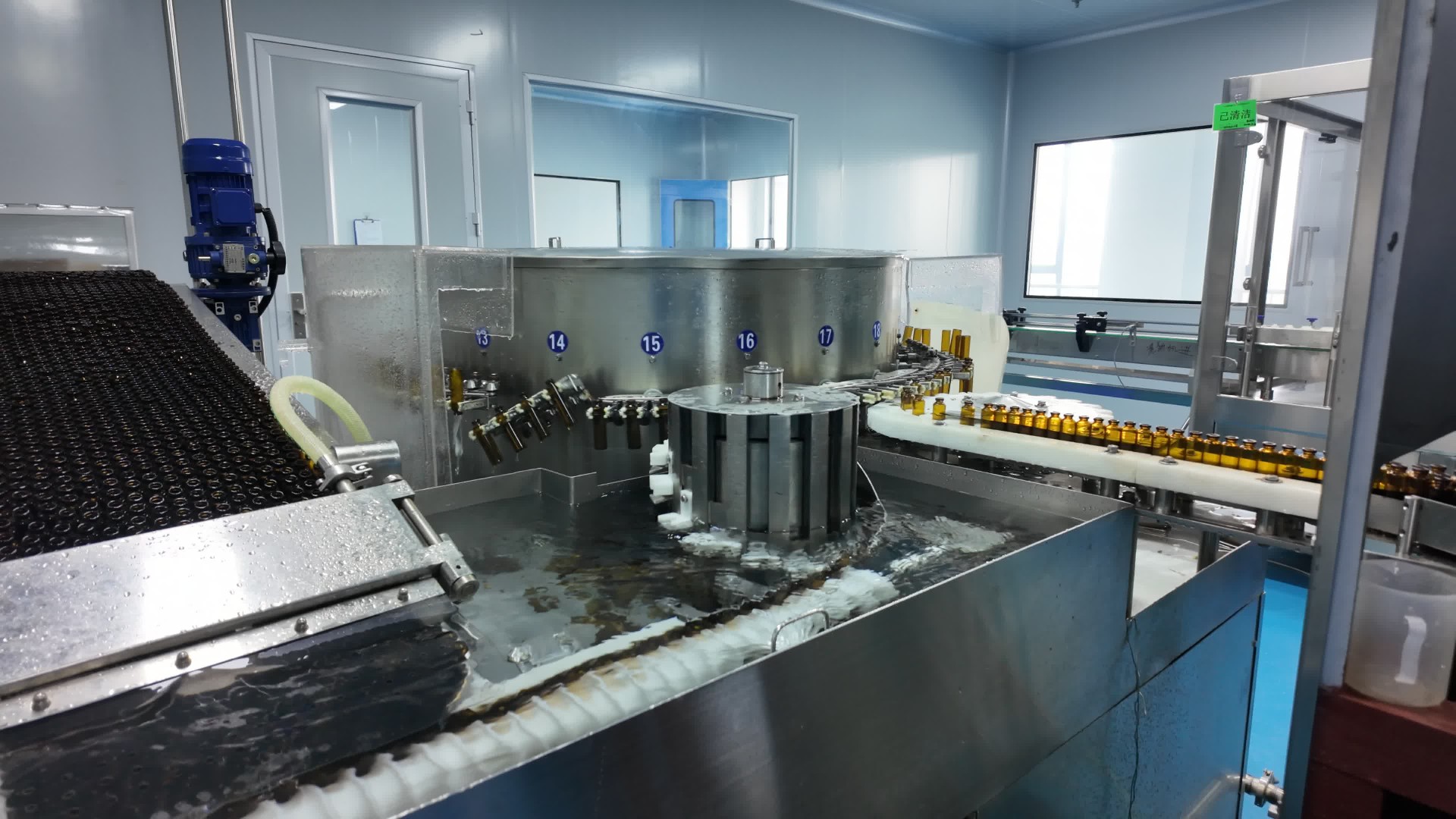
For relevant glass-bottle projects, the process includes bottle handling and washing, followed by filling and closure. Container cleanliness, fill volume, cap integrity and the product’s microbiological requirements are important checkpoints. Automated equipment can reduce manual handling, but it does not by itself make a product sterile. The appropriate hygiene controls and shelf-life evidence must be defined for the actual formula and pack.
3. Stand-up pouch, spouted pouch and liquid sachet formats
The Chinese article describes automated lines for portable pouch formats. A project may involve pouch feeding, opening, filling and heat sealing, with packaging-material specifications reviewed before production. Depending on the approved line and product, process checks can include fill weight, sealing temperature, pressure, seal integrity and appearance. A spout or custom artwork requires separate compatibility and label review.

4. PP-bottle filling
The report also describes a dedicated line for polypropylene (PP) bottle formats. Bottle and cap specifications, line tooling, fill-volume settings and closure torque should be matched to the approved pack. In-process checks may address bottle condition, fill quantity, cap application and leakage risk. Actual inspection frequency and acceptance limits belong in the product-specific control plan; this article does not imply that every bottle receives every possible laboratory test.
5. Hygiene, records and traceability
SPARDER’s source article emphasises controlled workshop conditions, supplier documentation and batch-level traceability from material receipt to finished goods. Production and monitoring records should identify the relevant materials, equipment, process settings, checks and product batch. Environmental monitoring and any clean-area designation must be supported by the facility’s own records and applicable standards. A Chinese domestic classification should not be assumed to equal a particular international cleanroom class.
Liquid-format food products are not automatically sterile products or medicines. Claims concerning ingredients, shelf life, safety or performance must be based on the actual finished product and the rules of the intended market. The available manufacturing formats and packaging options should be confirmed during project assessment.
Originally published in Chinese on April 2, 2026. This English edition uses three relevant images from the original workshop report and describes hygiene controls without converting the original’s broad “aseptic” wording into an unverified sterility claim.
 Return