
Editorial adaptation of the SPARDER Chinese article on common protein ingredients, originally published on 23 August 2024. This English version focuses on ingredient selection and formulation; it does not make product-specific nutrition or health claims.
Start with the ingredient specification, not a blanket animal-versus-plant ranking
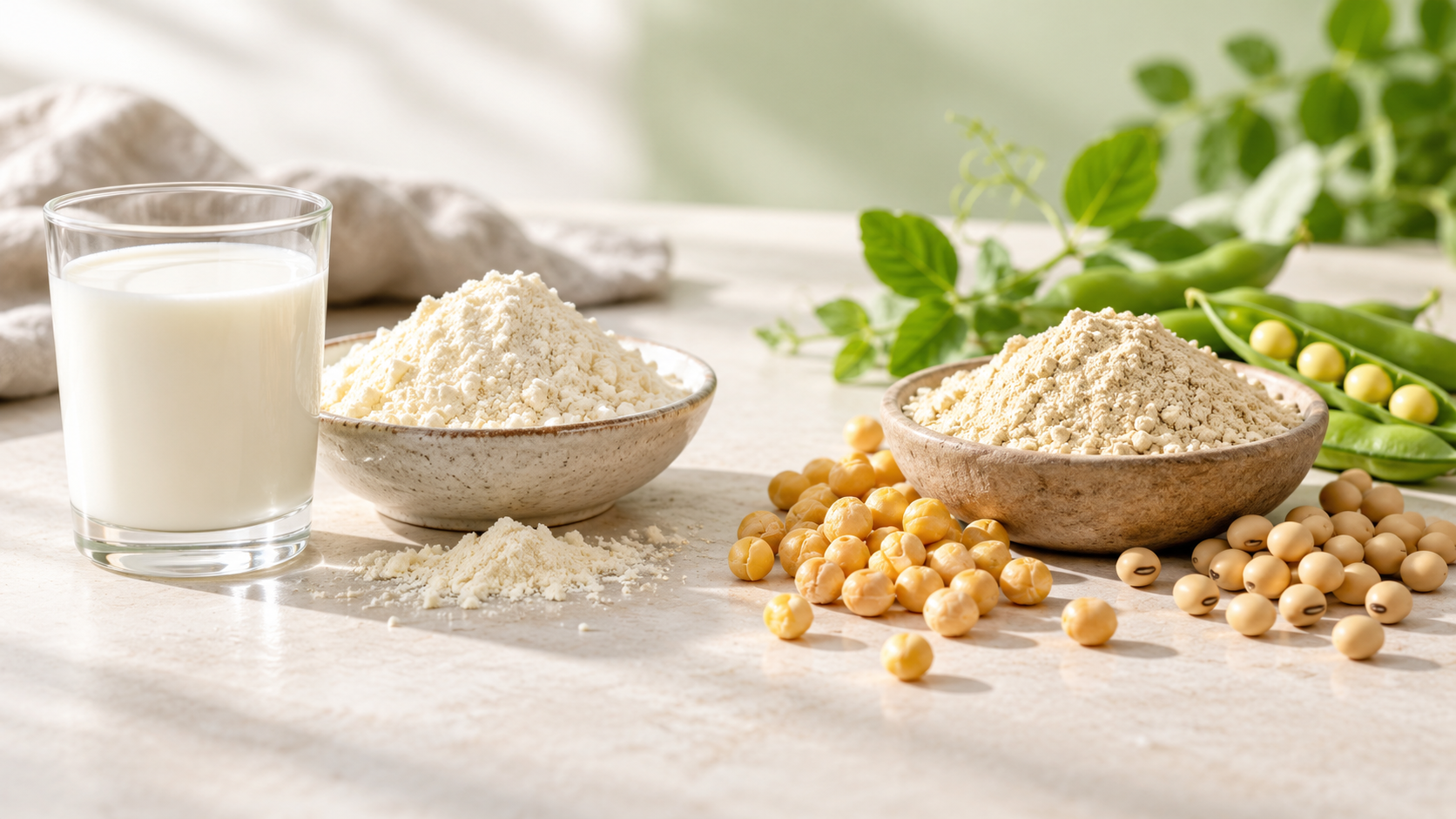
Protein powders are used across beverage mixes, bars and other food formats. Milk-derived options include whey protein concentrates or isolates, milk protein and casein-based ingredients. Plant-derived options include soy, pea and other source-specific proteins. These are ingredient families, not interchangeable specifications: processing method, protein concentration, flavour, solubility and the intended product format can differ substantially.
The amino-acid profile and digestibility of a finished formulation must be assessed against the actual ingredient specification and intended use. It would be misleading to say that every animal protein is “complete” or every plant protein is deficient. The FAO's protein-quality report provides a scientific framework for evaluating indispensable amino acids and digestibility; it is not evidence that a particular SPARDER product has a given score.
Five practical checks for a protein-formulation brief
Identity and documentation: Confirm the botanical or animal source, manufacturing route, ingredient name, certificate of analysis, and applicable food-use status in the destination market.
Nutrition target: Compare protein content and amino-acid data from the supplier's actual specification. Calculate nutrition declarations from the final recipe and applicable testing or calculation rules.
Processing behaviour: Test dispersion, sedimentation, viscosity, heat and pH tolerance, flavour and texture in the intended beverage, powder or bar system. Bench performance should be confirmed under the planned process and shelf-life conditions.
Allergens and cross-contact: Milk and soy require particular attention. For U.S. packaged foods, FDA guidance identifies milk and soybeans as major allergen food sources; other markets have their own labelling rules. Review the full formula, shared-line controls and finished-product label.
Claims and packaging: Do not transfer an ingredient study or supplier claim directly to the finished product. Review serving size, nutrient declarations, permitted claims, packaging compatibility and target-market rules before publication or launch.
What to provide for an OEM/ODM discussion
A useful starting brief names the destination market, intended format, serving size, target protein amount, preferred or excluded protein sources, allergen constraints, flavour direction, packaging and target shelf life. These inputs help a development team screen feasible ingredient and process options; they do not by themselves establish regulatory clearance, a validated formula or commercial readiness.
References: FAO, Dietary Protein Quality Evaluation in Human Nutrition (2013); U.S. FDA, Food Allergen Labelling Guidance (Edition 5). Local regulatory review remains necessary for each finished product and sales market.
 Return