
Adapted from a SPARDER Chinese industry article first published on 30 July 2024. This editorial discusses formulation questions, not a finished-product launch or a health claim.
“Bulletproof coffee” is commonly used to describe coffee blended with a fat source. It is not a single standardized recipe. For a food-development team, the practical choices are the coffee base, the identity and amount of each oil or dairy ingredient, the intended serving, and whether the product will be served as a fresh beverage or sold as a reconstitutable powder.
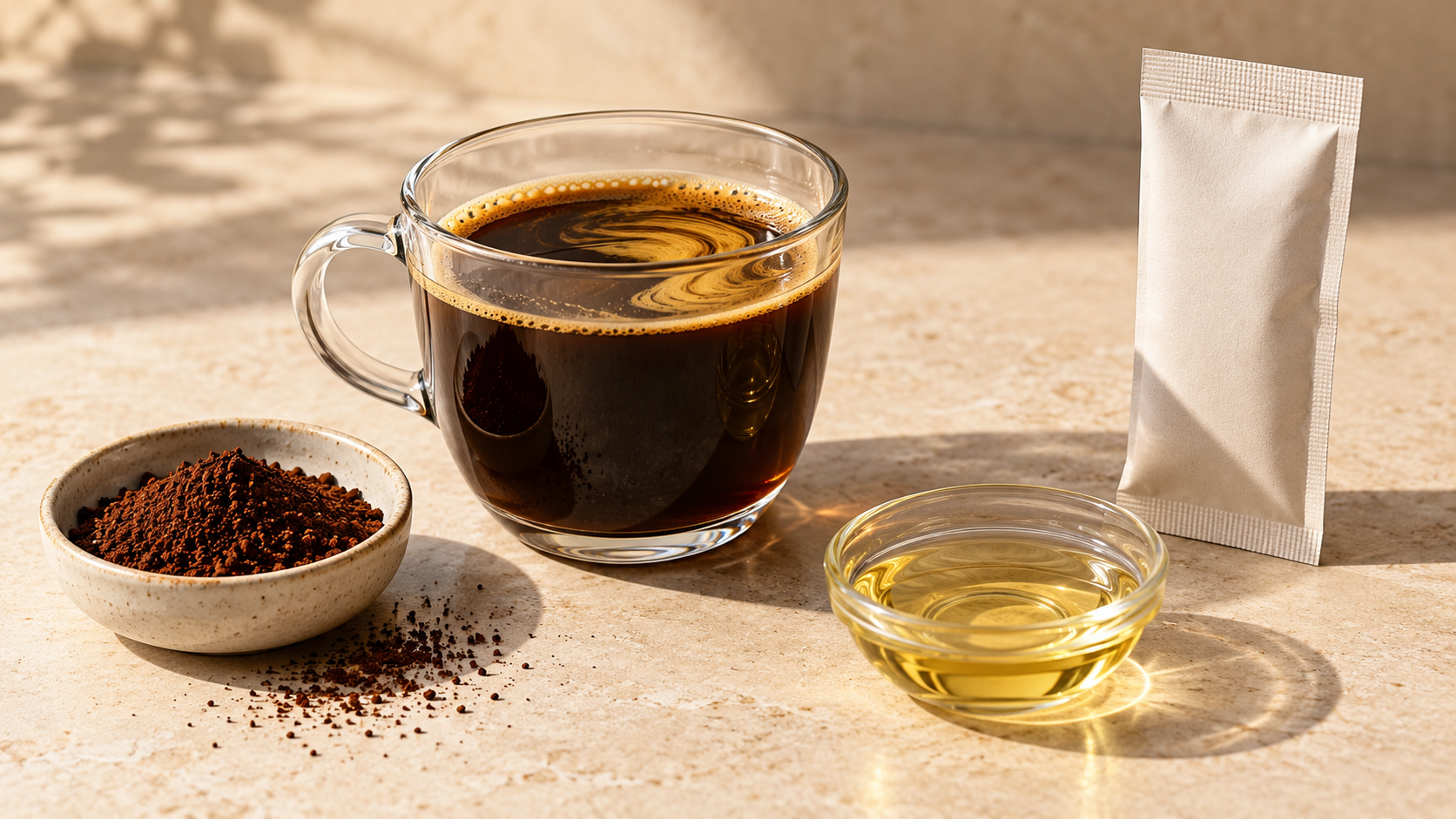
Conceptual editorial image. It is not a photograph of a SPARDER formulation, production batch or commercial product.
Ingredient identity comes before a format choice
Butter, coconut oil and medium-chain triglyceride (MCT) oil differ in composition and handling. A purchasing specification should identify the precise ingredient, supplier, fatty-acid profile where relevant, allergen status, quality criteria and storage conditions. “MCT oil” on its own is not a complete material specification.
Keeping oil dispersed in a ready-to-drink beverage
An oil phase does not remain evenly mixed in coffee simply because the ingredients have been stirred together. Developers can assess a suitable emulsification and homogenization process, then test droplet distribution, visible separation, taste and stability under the actual filling, transport and storage conditions. Process settings must be validated for the specific formula and equipment rather than copied from a generic recipe.
Turning the concept into a powder
A powdered drink adds another design task: the oil must be incorporated into a dry, flowable system that reconstitutes acceptably. Depending on the ingredients and process, this may involve an appropriate carrier and encapsulation approach. Development trials should check powder flow, oil release, wettability, mixing behavior, flavor, oxidation and the barrier properties of the proposed pack.
A dairy-containing option also needs clear allergen controls and label review. Coffee and fat levels affect the nutrition declaration and serving size. Ingredient permissions, naming, claims and labels must be checked for each target market and finished-product category; no specific health or weight-management benefit is implied by the format name.
For an OEM/ODM brief, useful starting information includes the desired beverage or powder format, target market, serving size, ingredient specifications, sensory target, shelf-life goal and packaging plan. The final formula and its claims require product-specific review before commercial release.
 Return