
B2B Nutrition Product OEM/ODM Services
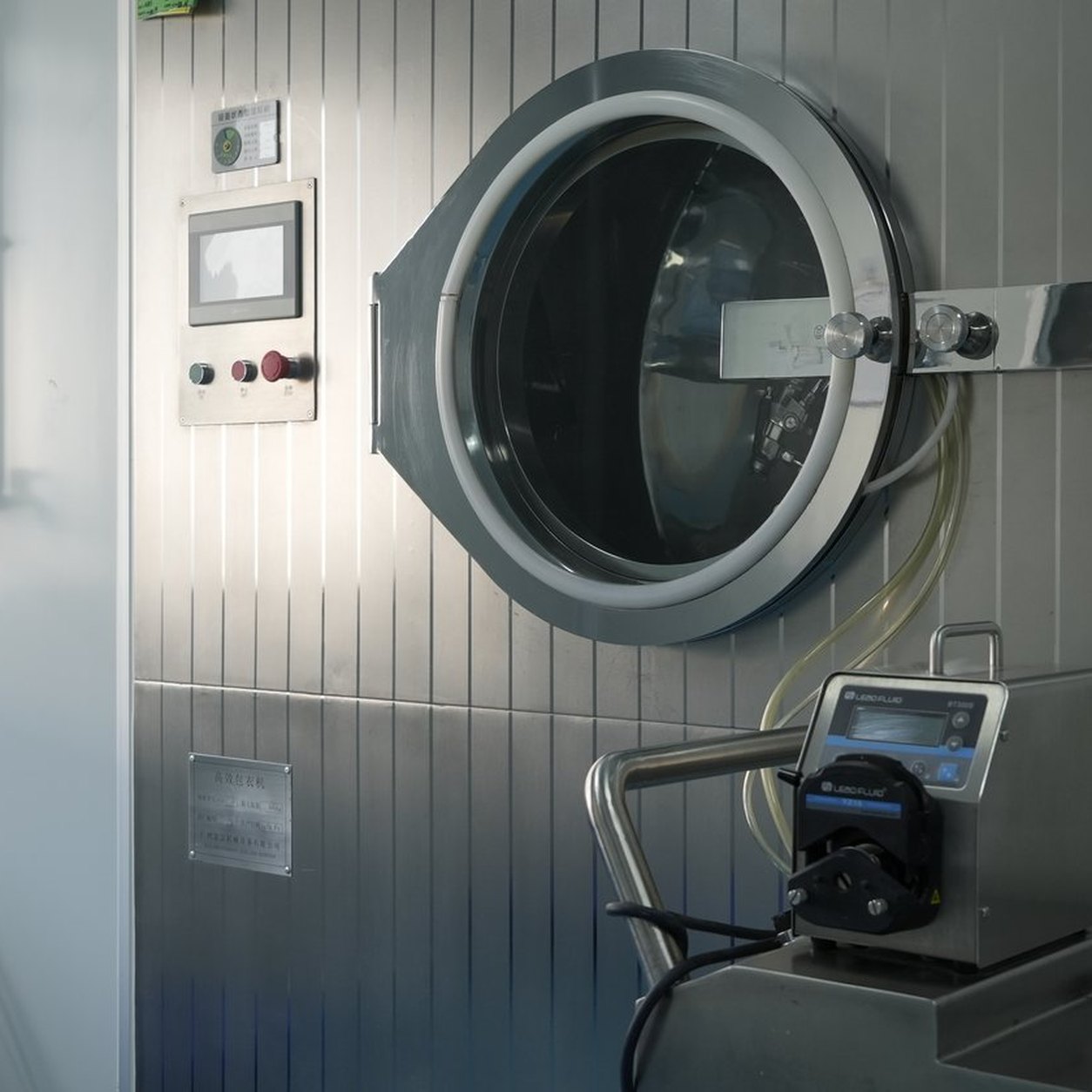
Tablets, powders and solid beverages are the broadest dosage family in nutrition — and the easiest to make cheaply. What separates a good supplier is content uniformity and stability, not appearance.
Typical flow for tablets: dispensing → blending → granulation (wet or dry) or direct compression → drying → sizing → final blend → compression → coating where required → packaging. For powders: dispensing → blending → filling → sealing.
Key control points. Blending: premix or geometric dilution for minor components, and validate blending time — longer is not always more uniform. Granulation and moisture: the drying curve determines compressibility; too wet causes picking, too dry causes capping. Compression: read weight variation, hardness and friability together. Coating: weight gain and inlet temperature govern appearance, taste masking and moisture protection. Powder flow: fill-weight stability is fundamentally powder flow matched to equipment parameters.
Common failure modes. Capping and lamination from high elastic recovery or excessive force; picking from moisture or low lubricant; content non-uniformity from skipping the premix; powder caking from hygroscopic ingredients without encapsulation or barrier packaging; stick-pack leakage from a seal temperature that does not match the film.
Pack selection. Plastic bottles suit everyday tablets and capsules at low cost; blister packs give unit dosing and moisture protection for pharmacy channels and gift sets; stick packs suit single-serve and e-commerce; stand-up pouches offer flexible capacity and good shelf presence.
What buyers should check. SC licence scope covering pressed candy and solid beverages; ISO 9001 / ISO 22000 / HACCP / FSSC 22000; and for solids specifically — content uniformity, disintegration or dispersion time, moisture, microbiological results, and whether the nutrition panel and content claims match measured values.
You also want to know...
If there is any infringement, please contact us for removal.